Yet none of these advances matter if you don’t know your status. HIV testing is not just a routine blood draw. It is the single most important action you can take — for yourself and for the people around you. It is, quite simply, the first step to ending AIDS.

Table of Contents
- HIV vs. AIDS: What Is the Difference?
- Why HIV Testing Is the First Step to Ending AIDS
- What You Gain From Getting Tested: More Than a Result
- Who Should Get an HIV Test?
- No Symptoms — Does That Mean No HIV?
- Types of HIV Tests: Which One Is Right for You?
- If Your Result Is Positive: What to Do Next
- If Your Result Is Negative: What to Do Next
- Common Barriers to HIV Testing — and How to Overcome Them
- Where to Get an HIV Test in Thailand
- HIV Testing and Thailand’s Goal to End AIDS
- HIV Myths You Should Stop Believing in 2026
- Summary
HIV vs. AIDS: What Is the Difference?
Many people use HIV and AIDS interchangeably, but they are not the same thing. Understanding the difference makes it clear why early HIV testing is so critical.
What Is HIV?
HIV (Human Immunodeficiency Virus) is a virus that attacks the body’s immune system — specifically CD4 cells. Without treatment, HIV gradually weakens the immune system over months or years, leaving the body vulnerable to infections and disease.

What Is AIDS?
AIDS (Acquired Immunodeficiency Syndrome) is the late stage of HIV infection, reached when the immune system has been severely damaged and the body can no longer fight off certain infections or cancers known as opportunistic illnesses.
✅ The key point in 2026: If HIV is detected early and treated consistently with antiretroviral therapy (ART), the vast majority of people with HIV will never progress to AIDS and can expect a near-normal life expectancy.
Why HIV Testing Is the First Step to Ending AIDS
Ending the AIDS epidemic does not start with a government policy or a hospital program alone. It starts with individuals — people like you — choosing to get tested.

1. Early Detection Leads to Earlier, More Effective Treatment
When HIV is detected early, antiretroviral therapy (ART) can begin immediately. This keeps the viral load in the blood extremely low, preserves immune function, and dramatically reduces the risk of long-term health complications.
2. Testing Enables U=U and Breaks the Chain of Transmission
People who are on treatment and have achieved an Undetectable viral load cannot sexually transmit HIV to their partners — a principle confirmed by the World Health Organization and backed by large-scale clinical studies. But this is only possible if the person first knows their status through an HIV test.
3. Testing Finds People Who Don’t Know They Have HIV
A significant number of people living with HIV are unaware of their status. These individuals may unintentionally transmit the virus. Expanding access to HIV testing is the most direct way to identify and support this group before further transmission occurs.

4. Testing Reduces Stigma and Builds Informed Communities
When testing becomes normalized — something people do as a routine part of sexual health care — fear and stigma around HIV decrease. Communities become better informed, more compassionate, and more effective at prevention.
What You Gain From Getting Tested: More Than Just a Result
Many people think an HIV test gives you one of two answers. In reality, the act of testing opens doors to far more.
- 🧠 Accurate knowledge of your health status — no more guessing or anxiety from uncertainty
- 😌 Reduced mental stress — not knowing is often more damaging to wellbeing than the result itself
- 📋 A foundation for future prevention planning — including informed decisions about PrEP
- 🏥 Immediate access to treatment if needed — before the virus can cause significant immune damage
- 💬 Access to expert counseling from sexual health professionals
- ❤️ Better care for your partners — because informed decisions protect everyone involved
Who Should Get an HIV Test?
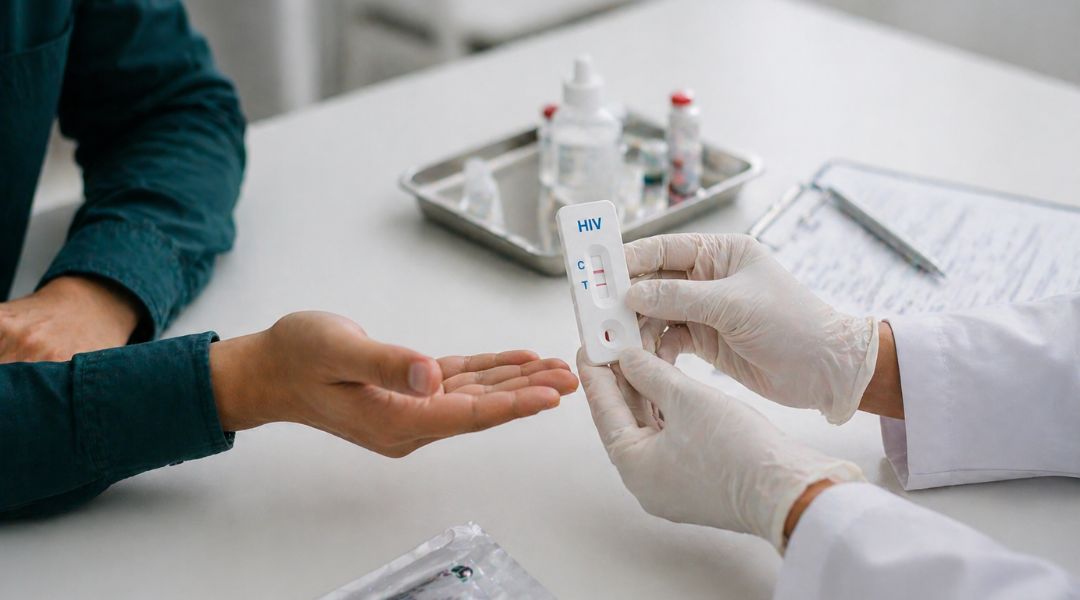
The short answer: anyone who has ever engaged in behaviors that carry a risk of HIV transmission. This includes more people than many assume.
You Should Consider HIV Testing If You Have:
- Had vaginal, anal, or oral sex without a condom
- Had more than one sexual partner at the same time
- Recently started a new sexual relationship without both partners knowing their HIV status
- Been diagnosed with another sexually transmitted infection (STI)
- Shared needles, syringes, or other drug-injection equipment
- Plans to start PrEP (an HIV test is required before beginning PrEP)
- Never been tested and are sexually active
- A pregnancy or plans to become pregnant
💡 Even without any symptoms, getting an HIV test is recommended. Early-stage HIV often presents no noticeable signs at all.
No Symptoms — Does That Mean No HIV?
Not at all. This is one of the most dangerous misconceptions about HIV — and a primary reason why the virus continues to spread undetected.
In the early weeks after infection, some people experience mild flu-like symptoms: low fever, sore throat, swollen lymph nodes, or fatigue. These typically resolve within two to four weeks. After that, HIV can remain completely asymptomatic for years — sometimes a decade or more — while the virus silently depletes the immune system.
Using “feeling fine” as a substitute for testing is unreliable and dangerous. The only way to know your HIV status with certainty is to get tested.
Types of HIV Tests: Which One Is Right for You?
Several types of HIV tests are available in Thailand in 2026. A healthcare provider or counselor will help determine the most appropriate test based on when the potential exposure occurred.
| Test Type | Earliest Detection | Accuracy | Time to Result |
|---|---|---|---|
| Rapid Test (point-of-care) | ~4–6 weeks after exposure | High | 20–30 minutes |
| 4th Generation Lab Test (Ag/Ab combo) | ~4 weeks after exposure | Very high | 1–3 days |
| NAT / PCR Test | 10–14 days after exposure | Highest | 1–7 days |
| Confirmatory Test (Western Blot / supplemental) | Used to confirm a reactive result | Very high | 1–7 days |
⚠️ Important: Every HIV test has a window period — the time between exposure and when the test can reliably detect the virus. Always consult a healthcare provider about the best time to test after a potential exposure.
If Your Result Is Positive: What to Do Next
The first thing to know is this: in 2026, HIV is a manageable chronic condition. People who are diagnosed and start treatment early go on to study, work, maintain relationships, and live long, full lives.
Steps After a Positive HIV Diagnosis
- See an infectious disease specialist as soon as possible — the sooner treatment starts, the better the outcome
- Complete additional health assessments — including CD4 count, viral load, and screening for co-infections
- Start antiretroviral therapy (ART) — modern regimens often require just one pill per day and have minimal side effects
- Attend regular follow-up appointments — typically every three to six months to monitor viral load and overall health
- Seek mental health support — counseling services specifically for people living with HIV are available
🌟 Treatment goal: Achieving an Undetectable viral load — meaning HIV cannot be sexually transmitted to partners (U=U) and your immune system remains protected.
If Your Result Is Negative: What to Do Next
A negative result is great news — and an opportunity to build a proactive prevention plan going forward.
- 🛡️ Use condoms consistently with all sexual partners
- 📅 Retest regularly — every three to six months if you have ongoing risk behaviors
- 💊 Ask your doctor about PrEP — a once-daily pill that is highly effective at preventing HIV if you are at ongoing risk
- 🏥 Get screened for other STIs — including syphilis, gonorrhea, chlamydia, and hepatitis B/C
- 💬 Talk openly with your sexual partners about sexual health — it’s a conversation worth having
Common Barriers to HIV Testing — and How to Overcome Them
Despite the clear benefits, many people still hesitate to get an HIV test. Every concern has a practical answer.
| The Concern | The Reality |
|---|---|
| 😨 Fear of a positive result | A positive result means you can start treatment immediately. A negative result gives you peace of mind. Either way, knowing is always better than not knowing. |
| 😳 Fear of judgment or stigma | Reputable clinics and hospitals treat HIV testing as routine healthcare and maintain strict confidentiality. |
| 🤷 “I don’t think I’m at risk” | HIV does not discriminate by identity, appearance, or relationship status. Risk is determined by behavior, not by who you are. |
| ⏰ “I don’t have time” | A Rapid Test takes under one hour, and many clinics offer walk-in appointments with no advance booking required. |
| 🗺️ “I don’t know where to go” | Find HIV testing locations across Thailand at thehivmap.com/ — updated regularly. |
⚠️ Remember: Not getting tested does not eliminate risk. It only delays the opportunity to take action.
Where to Get an HIV Test in Thailand
Thailand has a well-developed network of HIV testing services, ranging from free government clinics to private sexual health centers.
- 🏥 Government hospitals — widely accessible, low cost, often free; most offer pre- and post-test counseling
- 🏨 Private hospitals and clinics — shorter wait times, greater privacy, often more flexible scheduling
- 💉 Specialist sexual health clinics — comprehensive services including HIV testing, STI screening, PrEP, and PEP under one roof
- 🤝 NGOs and community organizations — non-judgmental environments, particularly welcoming for LGBTQ+ individuals; some offer free or subsidized testing
- 📅 Free testing campaigns — organized periodically by the Ministry of Public Health and civil society groups, especially around World AIDS Day
🗺️ Find an HIV testing location near you at thehivmap.com/ — Thailand’s most comprehensive map of HIV test sites, PrEP clinics, and sexual health services.
HIV Testing and Thailand’s Goal to End AIDS
Thailand has made significant progress in expanding access to antiretroviral treatment and has one of the strongest public health responses to HIV in Southeast Asia. The country is working toward the UNAIDS 95-95-95 targets: 95% of people living with HIV knowing their status, 95% of those on treatment, and 95% of those achieving viral suppression.
Achieving those targets depends on one foundational action: more people choosing to get tested for HIV. When testing rates increase across Thailand, the impact is measurable:
- 📉 Fewer people unknowingly transmitting HIV to others
- ⚡ Earlier treatment initiation, better long-term health outcomes
- 🔗 Fewer new infections as more people reach Undetectable status (U=U)
- 💰 Lower long-term burden on the public health system
- 🌱 A society with greater HIV literacy and less stigma
HIV Myths You Should Stop Believing in 2026
- ❌ “HIV means my life is over.”
- ✅ False. With modern treatment, people living with HIV have near-normal life expectancy and quality of life.
- ❌ “If I feel fine, I don’t have HIV.”
- ✅ False. HIV is often completely asymptomatic for years. The only reliable way to know is to get tested.
- ❌ “HIV only affects certain types of people.”
- ✅ False. HIV does not select by gender, sexuality, age, or identity. Risk is determined by specific behaviors, not by who you are.
- ❌ “Testing is scary — I’d rather not know.”
- ✅ Not knowing is scarier. Without a diagnosis, you lose access to treatment, prevention tools, and the ability to protect your partners.
- ❌ “If one partner takes PrEP, condoms aren’t necessary.”
- ✅ Partially false. PrEP is highly effective against HIV but does not protect against other STIs. Condoms remain important for comprehensive sexual health.
- ❌ “U=U means someone with HIV is cured.”
- ✅ False. U=U means a person on effective treatment cannot sexually transmit HIV to a partner. It does not mean the virus is gone — ongoing treatment is still essential.
Summary: HIV Testing Is a Small Step That Changes Everything
Ending AIDS does not begin with a headline policy or a large-scale campaign alone. It begins with individuals — people making the decision to know their status today.
Whether you are getting tested because:
- You had a potential exposure and want to be sure
- You want to include HIV testing in your annual health checkup
- You are starting a new relationship and want to protect your partner
- You are considering PrEP
- Or you simply want the peace of mind that comes with knowing
Getting an HIV test gives you more than an answer. It gives you the information and the access to take control of your health — and the health of the people you care about.
“Knowing early doesn’t just give you an answer — it gives you the opportunity to shape your future.”
🗺️ Ready to get tested? Find HIV testing clinics, PrEP services, and sexual health resources near you at thehivmap.com/ — Thailand’s most up-to-date HIV service directory.
Similar Posts
Love2Test: A New Innovation for Accessible HIV Testing and Treatment in Thailand
HIV remains a significant public health challenge both globally and in Thailand. Despite major advances in antiretroviral therapy…
HIV and PrEP: The Basics and Benefits
HIV (human immunodeficiency virus) is a serious health condition that affects millions of people worldwide. While HIV can…
Benefits of ARV Pills
Antiretroviral (ARV) pills have emerged as a breakthrough in the Treatment of HIV, revolutionizing the lives of millions…
Living with HIV: Challenges and Support
Human Immunodeficiency Virus (HIV) is a virus that attacks the body’s immune system, making it harder for the…
PrEP for Serodiscordant Couples | Building a More Confident Life Together
Love should never be limited by health status — especially for serodiscordant couples, where one partner is living…
HIV and Human Rights: Advocacy and Action
HIV (human immunodeficiency virus) is a chronic health condition that affects millions of people worldwide. While medical advances…