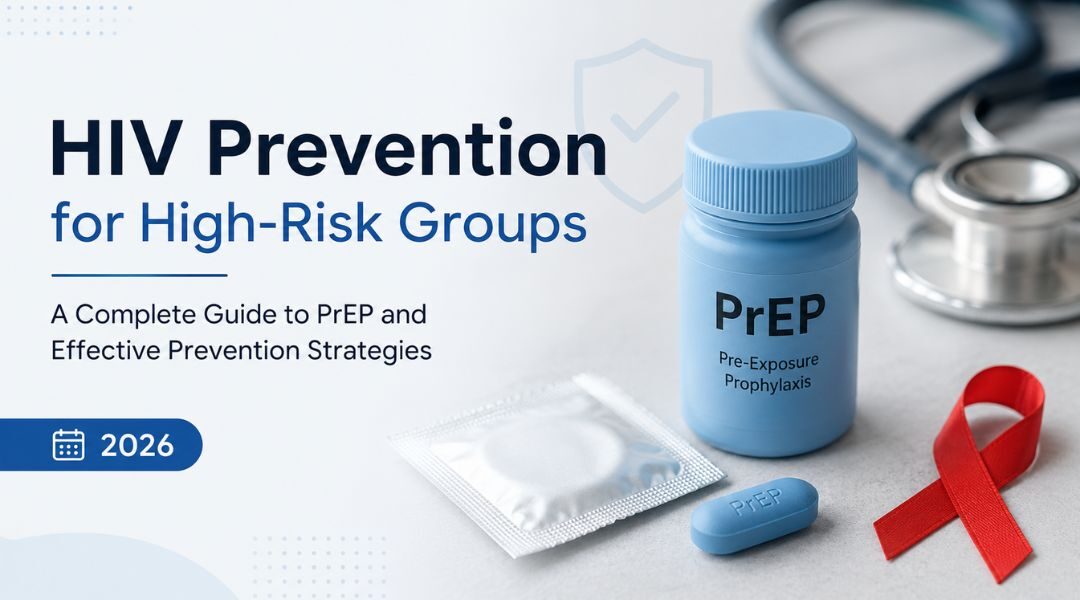
Although modern HIV prevention high-risk groups treatment has significantly improved and people living with HIV can now enjoy long, healthy lives with proper care, prevention remains the most effective strategy for reducing new infections. For individuals at higher risk of HIV exposure, understanding available prevention options — including PrEP (Pre-Exposure Prophylaxis), regular HIV testing, condom use, and other evidence-based interventions — is essential. This 2026 guide explains how high-risk individuals can reduce their risk of HIV, the role of PrEP, recommended prevention strategies, and the latest HIV prevention updates.
Contents
Who Is Considered at Higher Risk for HIV?
Being at higher risk for HIV is related to behaviors or situations, not a person’s identity or sexual orientation. Examples of situations that may increase HIV risk include:
- Having condomless sex with partners whose HIV status is unknown
- Having multiple sexual partners
- Having a partner living with HIV who has not achieved sustained viral suppression
- Sharing needles or injecting equipment
- Requiring PEP multiple times because of repeated HIV exposure
A healthcare provider can help assess your individual risk and recommend the most appropriate HIV prevention strategy.
What Is PrEP and How Does It Prevent HIV?
PrEP (Pre-Exposure Prophylaxis) is medication taken by HIV-negative individuals to reduce their risk of acquiring HIV before potential exposure.
When taken consistently and as prescribed, PrEP is highly effective in preventing HIV transmission through sexual contact. However, it’s important to remember that PrEP does not protect against other sexually transmitted infections (STIs) such as syphilis, gonorrhea, or chlamydia. Condoms remain an important part of comprehensive sexual health.
Comparison of HIV Prevention Methods
| Prevention Method | Main Benefit | Important Considerations |
|---|---|---|
| PrEP | Highly effective at preventing HIV when taken correctly | Requires regular HIV testing and medical follow-up |
| Condoms | Help prevent HIV and many other STIs | Must be used correctly every time |
| PEP | Emergency HIV prevention after potential exposure | Must be started within 72 hours |
| Regular HIV Testing | Early diagnosis and timely treatment | Should be performed routinely based on individual risk |
| U=U | Prevents sexual transmission when viral load remains undetectable | Applies only to people living with HIV who maintain sustained viral suppression |
Why Regular HIV Testing Matters for High-Risk Groups
Routine HIV testing is a critical component of HIV prevention. Knowing your HIV status allows you to access treatment early if needed and helps healthcare providers determine whether PrEP is appropriate for you. Regular testing provides several benefits:
- Early diagnosis and treatment
- Appropriate PrEP monitoring
- Reduced HIV transmission within the community
- Ongoing sexual health assessment
People using PrEP are generally advised to undergo HIV testing and routine follow-up at regular intervals as recommended by healthcare providers.

Key Benefits of PrEP for HIV Prevention
When prescribed and monitored by healthcare professionals, PrEP offers many advantages:
- Provides highly effective protection against HIV
- Supports proactive sexual health management
- Can be combined with other prevention methods
- Backed by extensive scientific research
- Includes regular medical monitoring for safety
PrEP should always be used according to medical guidance and should never be started or discontinued without consulting a healthcare professional.
5 Effective Ways to Reduce HIV Risk
- Talk with a healthcare provider about whether PrEP is right for you
- Use condoms consistently and correctly whenever appropriate
- Get tested regularly for HIV and other sexually transmitted infections
- Never share needles or injecting equipment
- Have open conversations with sexual partners about sexual health
Combining several prevention methods — often called Combination Prevention — offers greater protection than relying on a single strategy alone.
Common HIV Prevention Myths to Avoid
- Believing that PrEP protects against every sexually transmitted infection
- Stopping PrEP without consulting a healthcare provider
- Skipping routine HIV testing because you are taking PrEP
- Using PEP instead of PrEP for ongoing HIV prevention
- Relying on inaccurate or unverified online information
Receiving information from trusted healthcare professionals remains the best way to make informed decisions about HIV prevention.
What Is Combination Prevention?
Modern HIV prevention focuses on combining multiple evidence-based strategies rather than depending on a single intervention. Combination Prevention may include:
- PrEP
- Condom use
- Regular HIV testing
- Effective HIV treatment leading to sustained viral suppression (U=U)
- Sexual health counseling and support services
This comprehensive approach is recommended by many international public health organizations because it significantly reduces HIV transmission.
HIV Prevention Trends for High-Risk Groups in 2026
HIV prevention continues to evolve with advances in medicine and digital healthcare. Key trends include:
- Expanded access to PrEP through clinics and community organizations
- Online appointment scheduling and digital follow-up services
- Telehealth consultations for HIV prevention
- Continued efforts to reduce HIV-related stigma
- More personalized HIV prevention strategies based on individual risk
These developments make HIV prevention more accessible, convenient, and effective than ever before.
Learn More About PrEP
If you would like to explore evidence-based information about PrEP, global guidelines, research updates, and HIV prevention resources, visit PrEP Watch, an internationally recognized resource dedicated to HIV prevention.
Frequently Asked Questions About HIV Prevention and PrEP
Who should consider taking PrEP?
PrEP is recommended for HIV-negative individuals who have an increased risk of HIV exposure. A healthcare provider can determine whether PrEP is appropriate based on your personal circumstances.
If I take PrEP, do I still need condoms?
Yes. While PrEP is highly effective at preventing HIV, it does not prevent other sexually transmitted infections. Condoms remain an important part of safer sex.
How often should I get tested while taking PrEP?
Testing schedules vary by clinical guidelines, but regular HIV testing and medical follow-up are essential while using PrEP.
What’s the difference between PrEP and PEP?
PrEP is taken before potential HIV exposure as ongoing prevention, while PEP is an emergency medication started within 72 hours after possible HIV exposure.
Final Thoughts
Preventing HIV among people at higher risk requires a comprehensive approach that combines PrEP, regular HIV testing, condom use, and access to quality healthcare services. Together, these evidence-based strategies significantly reduce the risk of HIV infection while supporting long-term sexual health. As HIV prevention continues to advance in 2026, Combination Prevention has become the global standard for reducing new infections. By choosing prevention methods that fit your lifestyle and seeking advice from qualified healthcare professionals, you can take proactive steps to protect yourself and your partners.