
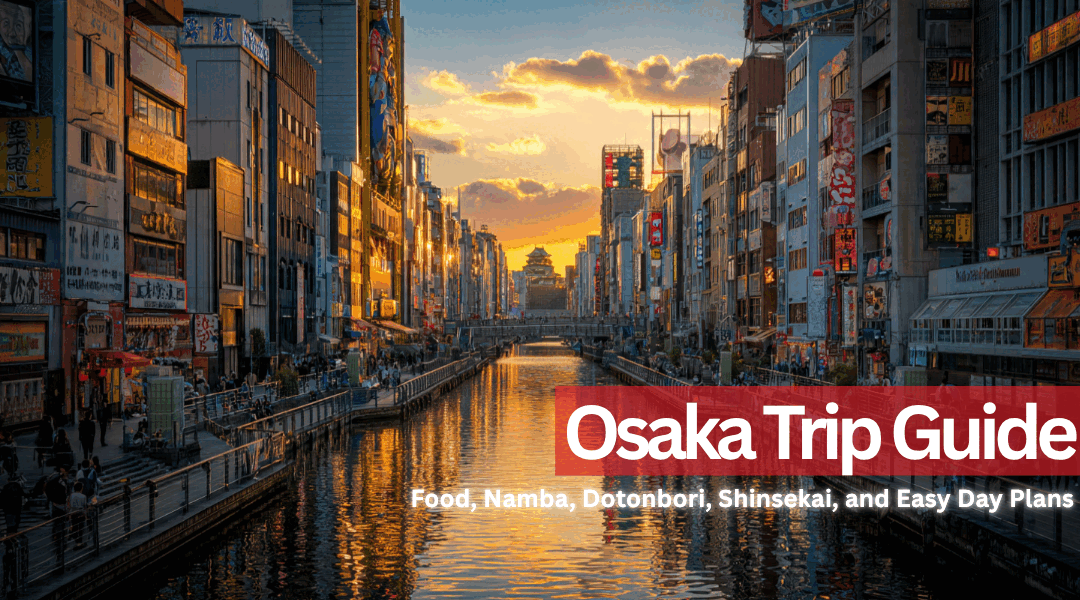
This Osaka trip guide is for travelers who want food, city walks, shopping streets, nightlife, and easy day plans. Osaka is often added after Tokyo and Kyoto, but it should not feel like a small extra stop. The city has its own style. It feels casual, bright, food-focused, and easy to enjoy without a strict plan. If you are planning a wider Japan trip, Travelpixo’s 10-day Japan itinerary for Tokyo, Kyoto, and Osaka is a useful place to start. That guide shows how Osaka fits into a classic Japan route after Tokyo and Kyoto. This Osaka trip guide expands that part of the trip with more detail on Namba, Dotonbori, Kuromon Market, Shinsekai, Osaka Castle, and simple ways to plan your days.
Osaka works best when you do not rush it. You can visit famous spots, but the city is also about small moments. A hot plate of takoyaki, a night walk in Dotonbori, a retro street in Shinsekai, or a simple meal near your hotel can become the part you remember most.
Contents
Why Osaka Deserves More Than One Quick Night
Osaka is sometimes treated as the food stop of Japan’s Golden Route. That is partly true, but it is not the full story. The city is also great for easy shopping, evening walks, retro neighborhoods, theme parks, and relaxed travel days. Tokyo feels huge and polished. Kyoto feels quiet and traditional. Osaka feels more casual and direct. It is a city where you can walk out in the evening, follow the food signs, and let the night happen naturally.
For a short visit, plan by area instead of jumping around too much. Namba and Dotonbori are great for a first day. Kuromon Market works well in the morning. Osaka Castle is a good classic stop. Shinsekai is best when you want something more retro and local-feeling. This Osaka trip guide keeps the route simple. You do not need to see everything. You just need enough time to eat well, walk slowly, and enjoy the city’s mood.
Start in Namba for the Easiest First Day
Namba is one of the best areas to start an Osaka trip. It has hotels, train access, restaurants, shops, and nightlife close together. It also puts you near Dotonbori, which is useful for your first evening. If you arrive from Kyoto, Tokyo, or Kansai International Airport, Namba makes things easier. You can check in, drop your bags, and start walking without a difficult route. That matters on a short trip.
Spend your first afternoon around Namba, Shinsaibashi, and Dotonbori. Walk through the shopping arcades. Stop for snacks when something looks good. Save your biggest food moment for the evening, when the area feels more alive. Namba is also a practical place to stay. After dinner, you can walk around Dotonbori, take photos, buy dessert, and return to your hotel without a long train ride. That makes the whole trip feel smoother.
Dotonbori Is Tourist-Friendly, but Still Worth It
Dotonbori is busy and touristy, but it is still worth visiting. For a first Osaka trip, it gives you the classic city feeling right away. You get neon signs, food streets, canal views, and crowds moving in every direction. Go in the evening if you want the best atmosphere. The lights reflect on the canal, and the giant food signs make the streets feel fun. This is also the best time to take photos near the Glico Running Man sign.
Food is everywhere in Dotonbori. You can try takoyaki, okonomiyaki, ramen, gyoza, sushi, or dessert. Do not worry too much about finding the most famous shop. A shorter line on a side street can sometimes be a better choice. A good route is simple. Walk along the canal, cross Ebisubashi Bridge, explore the smaller streets, then continue toward Shinsaibashi if you still want to shop. Dotonbori is popular for a reason. It is bright, easy, and fun for a first night.
What to Eat in Osaka
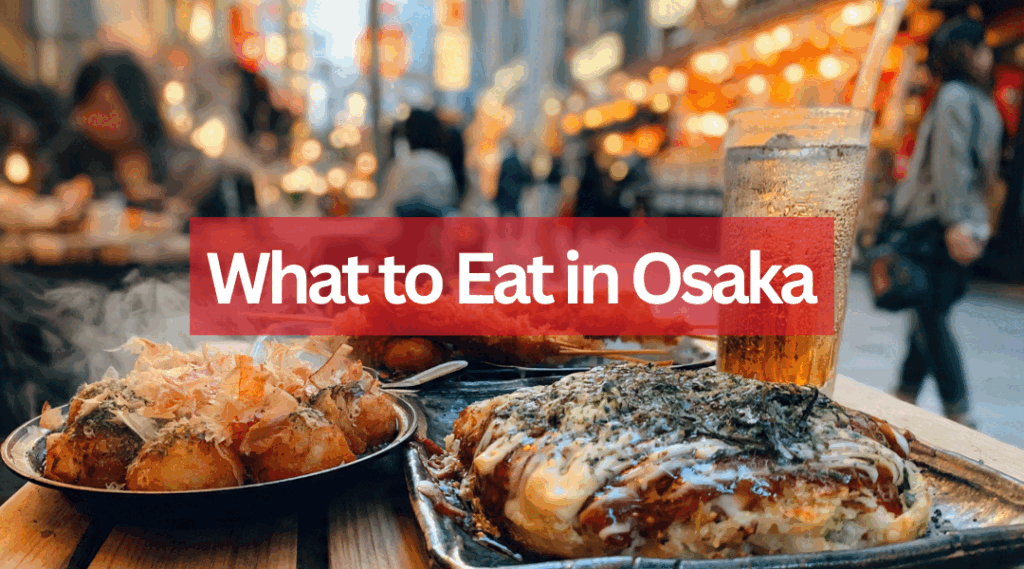
Food is one of the main reasons people love Osaka. The city is known for casual eating, so you do not need every meal to be fancy. Many of the best food moments are simple, hot, and easy to find.
Here are good foods to try:
- Takoyaki: hot octopus balls with sauce, mayo, bonito flakes, and green laver.
- Okonomiyaki: a savory pancake with cabbage, meat or seafood, sauce, and mayo.
- Kushikatsu: deep-fried skewers, often eaten around Shinsekai.
- Negiyaki: a lighter green onion pancake.
- Ramen: easy to find around Namba, Dotonbori, and Umeda.
- Japanese cheesecake or desserts: good for a snack between meals.
- Convenience store food: useful for late nights or simple breakfasts.
The best advice is to avoid planning every meal too tightly. Pick one or two places you really want to try. Then leave space for random finds. Osaka is a good city for following your appetite.

Kuromon Market Works Best as a Morning Food Walk
Kuromon Market is a good stop for a food-focused morning. It has seafood, fruit, snacks, small shops, and a busy market feel. Many travelers visit it from Namba because it is easy to reach. Go earlier in the day if you can. The market works better as a morning or lunch stop than a late afternoon plan. Walk slowly, try a few small bites, and keep moving when the walkway gets crowded.
You may see seafood bowls, grilled scallops, skewers, fruit, sushi, fried foods, and sweets. Prices can be higher in some parts, so it helps to look around before ordering. You do not need to eat everything there. Kuromon Market is best when you treat it as one part of your Osaka day. Visit in the morning, then continue to Namba, Den Den Town, or Shinsekai. That keeps the day easy and balanced.
Shinsekai Gives Osaka a Retro Feeling
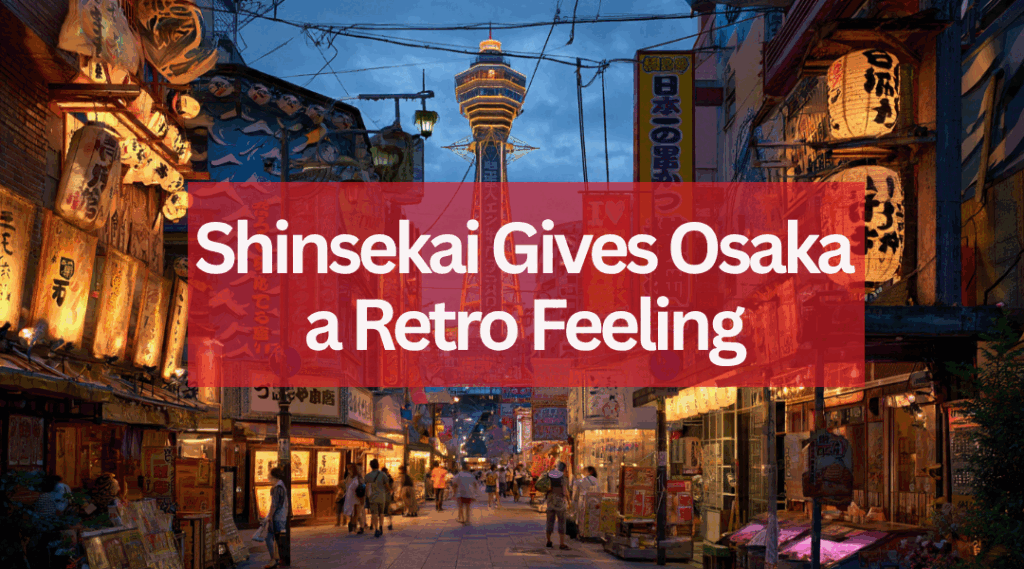
Shinsekai is a good area to visit when you want Osaka to feel different from Dotonbori. It has retro signs, kushikatsu restaurants, small streets, and views of Tsutenkaku Tower. The area feels older and less polished, which is part of its charm. A nice time to visit is late afternoon or evening. The lights start to come on, and the streets feel more active. You can walk around Janjan Yokocho, try kushikatsu, and take photos near Tsutenkaku.
Shinsekai is not as modern as Umeda. It is also not as famous as Dotonbori. Still, it adds more depth to your trip. It shows another side of Osaka that feels more nostalgic and local. For many travelers, this is the area that makes Osaka feel different from Tokyo and Kyoto. It is casual, a little rough around the edges, and very memorable.
Osaka Castle Is Worth It If You Plan It Right
Osaka Castle is one of the city’s most famous landmarks. It works well as a morning stop, especially if you want a break from food streets and shopping areas. The castle grounds are spacious, so you can enjoy the park even if you do not enter the museum. If you like history or city views, going inside can be worth it. If you are short on time, the outside view and park walk may be enough.
Try not to overload the same day. Osaka Castle pairs well with Kuromon Market, Namba, or Dotonbori. Visit the castle first, then move south for food and shopping. This keeps the route smooth. You avoid too much backtracking, and the day still has a good mix of sightseeing and local food.
Where to Stay in Osaka
For most first-time visitors, Namba is the easiest place to stay. It is close to Dotonbori, Shinsaibashi, Kuromon Market, restaurants, nightlife, and transport. If your Osaka trip is mainly about food and evening walks, Namba is a strong choice. Umeda is also a good area. It feels more modern and business-like. You will find large stations, department stores, underground shopping, and easy train connections. Umeda is useful if you plan day trips to Kyoto, Kobe, Nara, or Himeji.
Tennoji and Shinsekai can be good for travelers who want a more local or budget-friendly stay. These areas may feel less polished, but they can be interesting. First-time visitors may still find Namba or Umeda easier. If Universal Studios Japan is a big part of your trip, staying near the park for one night can make sense. For a general Osaka trip, though, Namba or Umeda usually gives you more flexibility.
A Simple 2 Day Osaka Itinerary
If you only have two days, keep the plan focused. Do not try to fit every area into one short stay.
- Day 1: Arrive in Osaka and stay around Namba. Walk through Shinsaibashi, then visit Dotonbori in the evening. Try takoyaki or okonomiyaki, take photos near the canal, and enjoy the lights.
- Day 2: Start with Osaka Castle or Kuromon Market. After that, continue to Shinsekai for kushikatsu and retro streets. End the night back in Namba or Dotonbori if you want one last food walk.
This route keeps travel time low. You get the classic Osaka experience without making the schedule too heavy.
A Better 3 Day Osaka Itinerary
Three days gives Osaka more room to breathe. You can enjoy the main areas without feeling rushed.
- Day 1: Explore Namba, Shinsaibashi, and Dotonbori. Focus on food, shopping streets, canal views, and an easy night walk.
- Day 2: Visit Osaka Castle in the morning. Go to Kuromon Market for lunch or snacks. Add Den Den Town if you like anime, games, or electronics. Finish the day in Shinsekai.
- Day 3: Choose based on your travel style. Theme park fans can spend the full day at Universal Studios Japan. Food travelers can explore Tenma, Ura-Namba, or Tenjinbashisuji Shopping Street. Day-trip travelers can use Osaka as a base for Nara, Kobe, Himeji, or Kyoto.
This version covers the main highlights, but still leaves space for your own style. That matters in Osaka. The city is not only about sightseeing. It is about food, mood, and neighborhoods.
Easy Nightlife in Osaka
Osaka is a good city for an easy night out. You do not need a big party plan. A simple night walk, a small bar, late food, or dessert after dinner can be enough.Namba and Dotonbori are the easiest areas for first-time visitors. They are bright, busy, and simple to explore after dark. Ura-Namba is good if you want smaller restaurants and a more local food-bar feeling. Tenma is another nice area for casual eating and drinks.
These areas often have a mixed crowd of locals, visitors, couples, friends, and solo travelers. That makes them easy to add to the trip without changing the whole itinerary. You can have one drink, eat something small, walk around, and head back when you feel done. For this Osaka trip guide, nightlife is not the main focus. It is just a nice extra. The city feels good at night, especially when you leave space for one unplanned evening.
Final Thoughts
This Osaka trip guide helps you enjoy the city as more than a final stop after Tokyo and Kyoto. Osaka has its own energy. It feels casual, food-focused, bright, and easy to explore.
Travelpixo’s 10-day Japan itinerary for Tokyo, Kyoto, and Osaka gives Osaka a clear place in a wider Japan route. It covers useful ideas like Namba, Dotonbori, Osaka Castle, Kuromon Market, Shinsekai, and Universal Studios Japan. This guide expands that Osaka section with more local flow, food ideas, and simple route planning.
For a first trip, stay around Namba or Umeda. Visit Dotonbori at night, try more food than you planned, and give Shinsekai a chance. Keep at least one evening open. Osaka feels best when you leave room for random food stops and unplanned walks.
References
- Travelpixo — 10-Day Japan Itinerary: Tokyo, Kyoto, & Osaka: Useful as the wider Japan route reference for travelers planning Tokyo, Kyoto, and Osaka together, with Osaka included near the end of the itinerary.
https://travelpixo.com/blog/10-day-japan-itinerary-tokyo-kyoto-osaka - Osaka Official Tourism — Kuromon Market: Useful for checking details about Kuromon Market, including its food options, market atmosphere, and place in Osaka food culture.
https://discover.osaka-info.jp/en/spots/kuromon-market